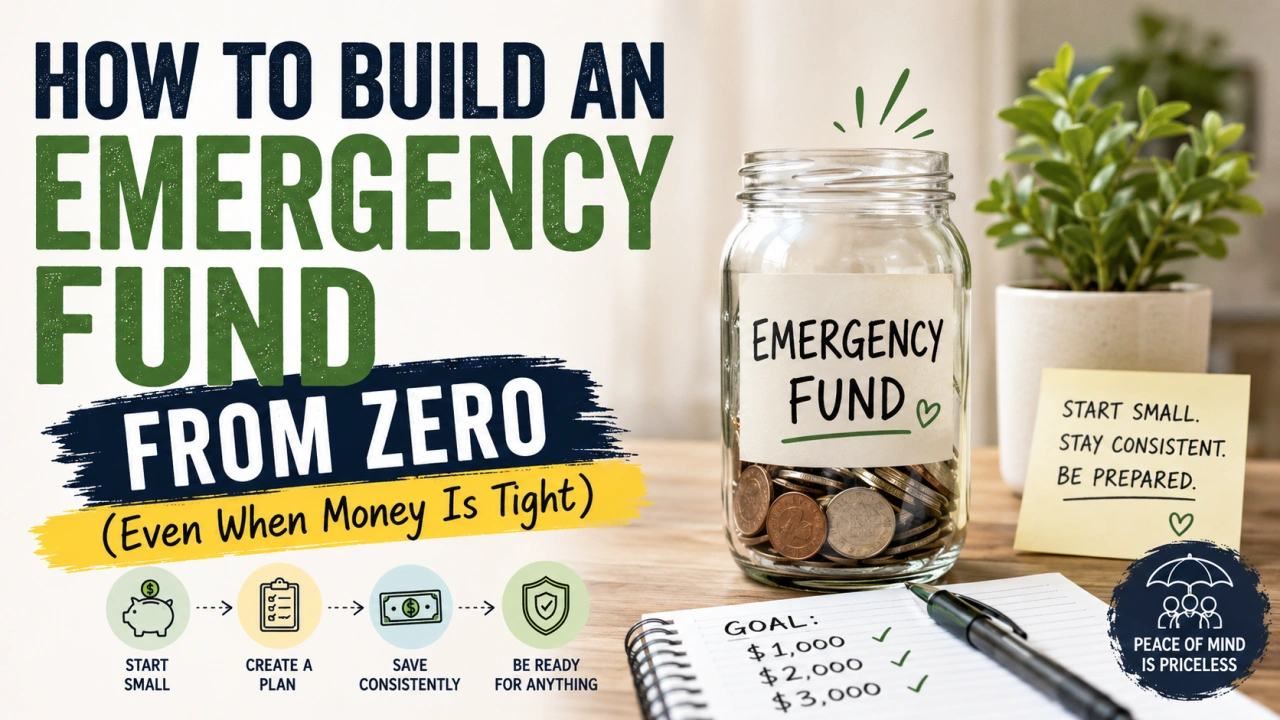
Picture this: your boiler breaks down in January. Or your car needs a repair you didn't see coming. Or you lose your job and the next paycheck isn't arriving for three weeks.
For millions of people across the US and UK, any one of those scenarios would be a genuine financial crisis — not because they're irresponsible, but because they simply don't have a cash buffer to absorb it. Research consistently shows that a large portion of households on both sides of the Atlantic couldn't cover an unexpected $1,000 or £1,000 expense without going into debt.
An emergency fund changes that. And building one from zero is more achievable than most people think.
What Is an Emergency Fund and Why Does It Actually Matter
An emergency fund is a separate pot of money you keep purely for genuine, unexpected emergencies — job loss, medical bills, urgent home or car repairs. Not holidays. Not a sale on trainers. Actual emergencies.
The psychological benefit is just as important as the financial one. When you know there's money sitting there for the worst case, everyday financial stress drops significantly. You stop living in fear of what might go wrong.
How Much Do You Actually Need to Save?
You've probably heard the advice to save three to six months of expenses. That's a reasonable long-term goal — but it's terrible advice for someone starting from nothing, because it's so overwhelming that most people don't start at all.
A far better approach is to set a starter goal of £500 or $1,000. That single amount is enough to handle the majority of common financial emergencies without touching a credit card. Once you hit that figure, you can extend the goal gradually.
Step 1: Open a Separate, Dedicated Savings Account
Keeping your emergency fund in your main current account is a mistake. When the money is visible and accessible alongside your daily spending, it gets spent — slowly, gradually, and without you even noticing.
Open a separate easy-access savings account specifically for this purpose. In the UK, strong options for 2025 include Marcus by Goldman Sachs, Chase UK, and Monzo's savings pot with competitive interest rates. In the US, look at high-yield savings accounts (HYSAs) from institutions like Ally Bank, Marcus US, or SoFi — all of which currently offer significantly higher interest than traditional bank accounts.
The key requirements: easy access (you need to be able to withdraw quickly in a real emergency), no fees, and a decent interest rate so your money grows passively while it sits there.
Step 2: Start Smaller Than You Think You Should
If you can only save £10 or $10 per week right now, start there. That's £520 or $520 in a year. That's your starter emergency fund — built without changing your lifestyle dramatically.
The goal in the beginning is not the amount. The goal is building the habit. Once saving becomes automatic and painless, you can increase the amount.
Step 3: Automate the Transfer
Set up an automatic transfer on the day you get paid — even if it's just £25 or $25. Automating the transfer means the decision is made once and then it happens every single time without requiring any willpower from you.
This is the single most effective thing most people can do to grow a savings habit. Willpower is unreliable. Automation isn't.
Step 4: Find Small, Painless Places to Cut
You don't need to overhaul your entire budget. Look for the lowest-effort cuts first — subscription services you've forgotten about, takeaway coffees swapped for home-brewed two days a week, unused gym memberships.
Use a free budgeting app like Emma (UK), Money Dashboard (UK), or Mint (US) to see where your money actually goes each month. Most people are surprised by at least one category.
Step 5: Add One-Off Windfalls Whenever They Arrive
Tax refunds, birthday money, overtime pay, cashback rewards, or any unexpected extra income — direct a portion of it straight to your emergency fund before it disappears into general spending.
You don't need to put all of it in savings. Even putting 30 to 50 percent of a windfall into your fund while spending the rest guilt-free is a powerful accelerator.
What to Do If an Emergency Happens Before You've Saved Enough
This is the part most finance guides skip. What if the boiler breaks when you've only got £150 saved?
Use what you have. Even £150 reduces the amount you need to borrow. Look at 0% purchase credit cards (many UK banks and US providers offer 12 to 18 months interest-free) for genuine emergencies. Avoid payday loans entirely — the interest rates are predatory and they make the situation significantly worse.
After the emergency, treat rebuilding the fund as a priority again. The goal is to get back to your target level before moving on to other financial goals.
How Long Will It Take?
Saving £25 or $25 per week, you'll hit £500 or $500 in 20 weeks — about five months. That's realistic for most people even on a tight budget.
Add occasional windfalls, small spending cuts, and an automatic transfer on payday, and you could realistically build a full one-month expense buffer within a year. That single achievement puts you ahead of the majority of households in both the US and UK.
The Mindset Shift That Makes It Sustainable
The hardest part of building an emergency fund isn't the saving — it's convincing yourself it's worth doing when everything seems fine. Emergencies feel abstract until they happen.
Think of your emergency fund the way you think of house or car insurance. You don't want to use it. You pay into it hoping you never need it. But the moment you do need it, you'll be desperately glad it's there.
Start today. Start small. Start now.

The Editorial Team
We are a collective of tech enthusiasts and digital experts dedicated to making sense of the evolving digital landscape for our global audience.
Connect With Us

0 Perspectives