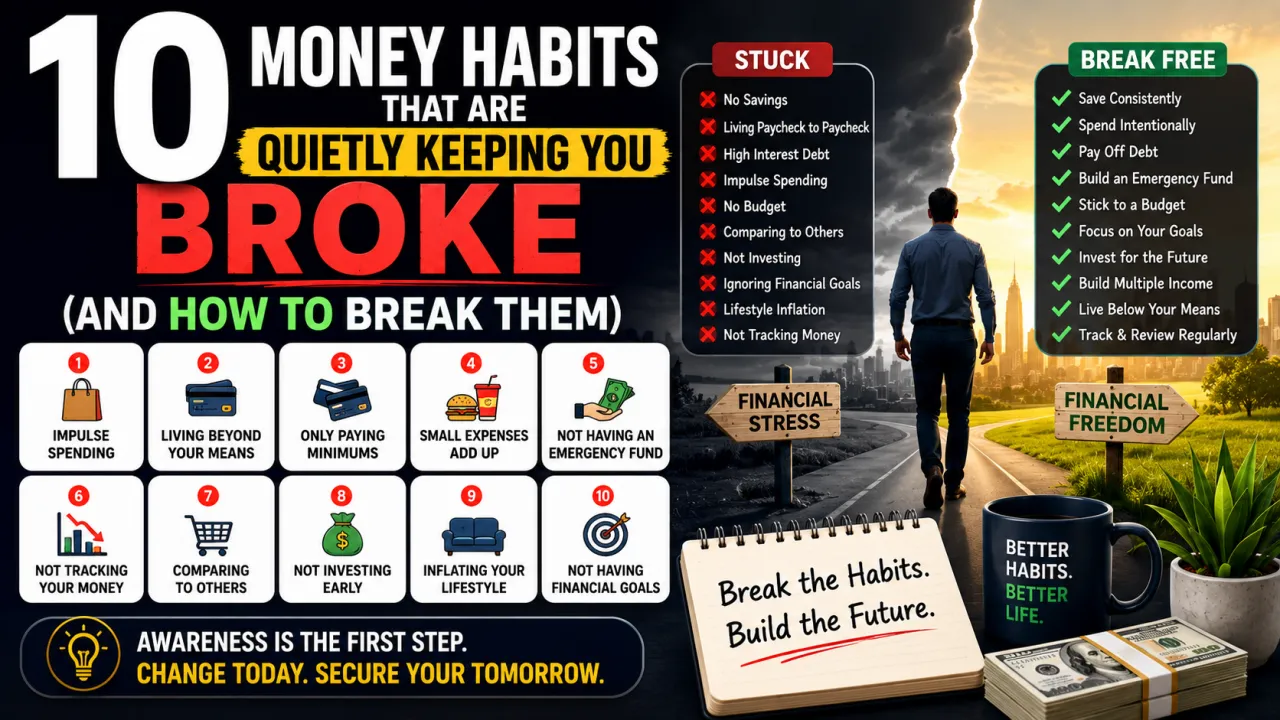
Here's an uncomfortable truth: most people aren't broke because of one big financial disaster. They're broke because of dozens of small habits that slowly drain money month after month, year after year.
These habits feel normal. They feel fine. And that's exactly why they're so dangerous.
Let's talk about 10 of the most common ones — and more importantly, what you can do about each of them.
1. Paying for Subscriptions You Forgot You Have
Streaming services. Gym memberships. Software tools. Free trials that converted to paid.
The average American household pays for over $200/month in subscriptions. Many of those services haven't been opened in months.
The fix: Do a full subscription audit once a quarter. Go through your bank statement and credit card charges line by line. Cancel anything you haven't used in 30 days. Tools like Rocket Money (US) or Emma (UK) can automate this.
2. Not Having a Budget (Or Having One You Ignore)
"I have a rough idea of what I spend" is not a budget. A rough idea doesn't catch the months when spending quietly jumps £300 above normal.
The fix: Use the 50/30/20 rule as a starting point. 50% of take-home pay goes to needs, 30% to wants, 20% to savings and debt repayment. Adjust based on your reality, but have actual numbers.
3. Keeping Up With Lifestyle Creep
Every time you get a raise, expenses mysteriously rise to match. New car, better apartment, nicer restaurants. This is lifestyle inflation — and it silently prevents wealth building.
The fix: When your income goes up, commit to saving at least 50% of the increase before lifestyle adjusts. If you earn $500 more per month, put $250 straight into savings before you get used to having it.
4. Carrying a Credit Card Balance
If you carry a balance from month to month, you're paying interest rates of 20–30% on that debt. No investment consistently returns 20%. You are mathematically losing money.
The fix: Prioritize paying off any revolving credit card debt before almost anything else (except an emergency fund). Use the avalanche method — pay minimums on everything, throw extra money at the highest-rate debt first.
5. Treating Your Emergency Fund as Optional
Life will surprise you. The car will need repairs. The boiler will break. You'll have an unexpected medical bill.
Without an emergency fund, these events go on a credit card — and suddenly you're paying 25% interest on a boiler repair for 18 months.
The fix: Start with a $1,000 / £1,000 emergency fund as a foundation. Build to 3–6 months of expenses over time. Keep it in a high-yield savings account, not your current account.
6. Buying Things on Sale You Wouldn't Have Bought Otherwise
A 40% discount on something you didn't need is not saving money. It's spending money.
"But I saved £50!" No — you spent £75 and told yourself a story.
The fix: Before any non-essential purchase, ask: "Would I buy this at full price?" If the answer is no, the sale price is irrelevant.
7. Paying Retail Price When You Don't Have To
Many people overpay for insurance, phone plans, internet, and banking products because they've never shopped around.
The fix: Review these annually:
- Insurance: run comparison quotes on Comparethemarket (UK) or Policygenius (US)
- Phone: MVNOs often offer the same coverage for significantly less
- Banking: high-yield savings accounts pay far more than traditional banks
8. Not Automating Your Savings
If savings depends on willpower, it usually doesn't happen. There's always something to spend money on.
The fix: Set up an automatic transfer to savings on payday — before you have a chance to spend it. Even $50/month builds a meaningful habit and compounds over time.
9. Paying for Convenience Too Often
Delivery fees. Takeaway instead of cooking. Convenience stores instead of supermarkets. Airport food. Grabbing a cab instead of planning transport.
None of these are wrong occasionally. The problem is when convenience spending becomes a daily default rather than an occasional choice.
The fix: Audit your convenience spending for one month. Total it up. Most people are genuinely surprised by the number. Then decide intentionally which convenience costs are worth it and which ones aren't.
10. Not Investing Because It Feels Complicated
"I'll start investing when I know more about it." Years pass. The market compounds without you.
The cost of waiting to invest is enormous. A 25-year-old who invests $200/month until 65 ends up with nearly $500,000 more than someone who starts at 35 — investing the exact same amount per month.
The fix: You don't need to be a financial expert to start. In the US, open a Roth IRA and invest in a low-cost index fund (like a total market or S&P 500 fund). In the UK, open a Stocks and Shares ISA and do the same. Set it to automatic monthly contributions and let it run.
The Common Thread
Every one of these habits shares the same root: spending on autopilot instead of with intention.
The solution isn't to become obsessive about money. It's to make your financial decisions deliberately, even just once a quarter. Review what's going out. Align spending with what actually matters to you. Automate the good habits.
Small adjustments, consistently applied, produce results that feel almost magical in 5–10 years.

The Editorial Team
We are a collective of tech enthusiasts and digital experts dedicated to making sense of the evolving digital landscape for our global audience.
Connect With Us

0 Perspectives